Pet Allergy
Asthma & Allergy Care, P.C. evaluates and treats pet allergy in children and adults across our New Jersey offices.
What Pet Allergy Is
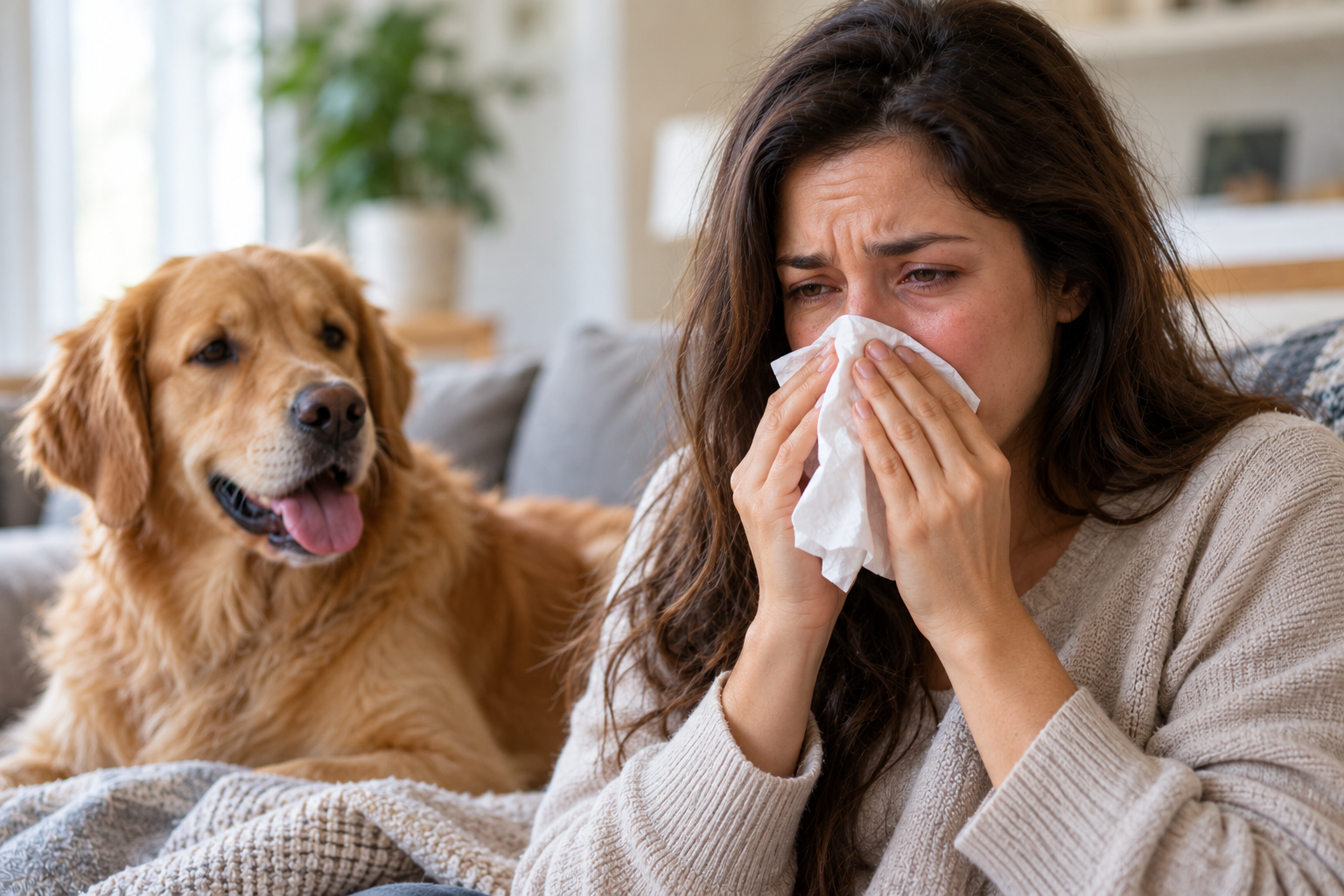
Pet allergy is an immune reaction to proteins carried by an animal. It can occur in response to cats, dogs, birds, or rodents. Reactions can affect the nose, eyes, skin, or lungs.
The proteins that trigger a reaction come from an animal's dander, saliva, or urine. Dander is made up of tiny flecks of skin that shed from the animal. These particles are light and can stay in the air, settle on furniture and clothing, and remain in a home for a long time.
Asthma & Allergy Care, P.C. evaluates and manages pet allergy in children and adults at our New Jersey offices.
Symptoms to Watch For
Pet allergy symptoms can appear in the nose, eyes, skin, or lungs.
Sneezing
Nasal congestion
Itchy or watery eyes
Skin rashes
Asthma symptoms in sensitive individuals
Diagnosing Pet Allergy
We use a combination of methods to confirm a pet allergy and rule out other causes.
Patient History
We review your symptoms, when they occur, and any patterns tied to contact with animals.
Allergy Skin Testing
A small amount of allergen is placed on the skin to check for a reaction.
Blood Testing
A blood sample can measure the immune response to specific animal allergens.
Managing Pet Allergy at Home
Simple changes at home can reduce exposure to pet allergens.
Limit or Avoid Pet Contact
Reducing time spent close to an animal lowers exposure to the allergens that trigger symptoms.
Keep Pets Out of the Bedroom
Keeping animals out of the bedroom reduces allergen exposure during sleep.
Use HEPA Filtration
A HEPA filter can help remove airborne pet dander from indoor air.
Clean Regularly
Regular vacuuming, dusting, and washing of fabrics reduces the amount of dander in the home.
Treatment for Pet Allergy
Treatment is tailored to each patient's symptoms and history.
Antihistamines
Antihistamines can reduce sneezing, itching, and runny nose caused by pet allergens.
Nasal Corticosteroids
Nasal corticosteroids help reduce inflammation and congestion in the nasal passages.
Asthma Medications
When pet allergens trigger asthma symptoms, asthma medications may be added to a treatment plan.
Immunotherapy When Appropriate
For some patients, immunotherapy is used to reduce sensitivity to pet allergens over time.
Living With Pets Despite Allergy
Some patients or family members want to keep a pet despite an allergy. In these cases, a combination of strategies can help reduce symptoms while continuing to share a home with an animal.
Keeping the pet out of the bedroom, using a HEPA filter, cleaning surfaces and fabrics regularly, and washing hands after contact with the animal can all reduce allergen exposure. A designated pet-free room gives a person a place with lower allergen levels.
We work with patients and families to build a plan that fits their household and their symptoms.
What to Bring to Your Visit
A little preparation makes your visit go smoothly.
Bring Your Insurance Card
Please bring your insurance card, along with any referral your plan requires.
Bring a Medication List
A list of the medications you currently take helps us understand your full picture.
Complete Forms in Advance
You can save time by completing your forms in advance from our Patient Forms page. Visit Patient Forms